Navigating Trade Winds: South Africa’s Balancing Act Amid Agoa Renewal And Deepening Ties With China
Introduction
South Africa has found itself at the centre of shifting global trade dynamics. On 03 February, United States (US) President Donald Trump signed a one-year extension of the African Growth and Opportunity Act (AGOA), reinstating duty-free access for eligible sub-Saharan African exports to the US market until 31 December 2026. This short-term renewal, retroactive to 30 September 2025 when the programme lapsed, offers a temporary reprieve but highlights ongoing uncertainties in US-Africa relations. Just days later, on 05 February, South Africa’s Trade, Industry and Competition Minister Parks Tau and China’s Commerce Minister Wang Wentao inked the China-Africa Economic Partnership Agreement (CAEPA), a framework paving the way for duty-free access to China’s vast market.
These developments reflect South Africa’s strategic navigation of a multipolar world, balancing economic imperatives with geopolitical pressures. As Africa’s most industrialised economy, South Africa leverages such agreements to foster growth, but they also highlight tensions in its relationship with the US. This article analyses these events through an Africa-centric lens, emphasising South African agency in pursuing empowerment over dependency. It explores implications for diplomacy, trade, intelligence sharing, and military coordination between South Africa and the US, while touching on a recent naval exercise that exacerbated strains.
The Agoa Renewal: A Short-Term Fix In A Long-Term Strategy
AGOA, enacted in 2000 under US President Bill Clinton, has been a cornerstone of US-Africa economic engagement, granting duty-free entry for over 1,800 products from 32 eligible countries. For South Africa, it has facilitated exports worth billions, particularly in automobiles, apparel, and minerals. In 2024, South Africa accounted for nearly half of AGOA’s non-energy imports to the US, with passenger vehicles comprising 64% of its eligible shipments.
The 2026 renewal, embedded in a USD 1.2-trillion appropriations package, extends the programme but only for one year—far shorter than the three-year extension initially passed by the US House. US Trade Representative Jamieson Greer emphasised the need to modernise AGOA to align with President Trump’s “America First” policy, demanding greater reciprocity and market access for US firms. African stakeholders, including South Africa’s Department of Trade, Industry and Competition (DTIC), welcomed the extension but expressed disappointment over its brevity, arguing it hampers long-term investment planning.
From a South African perspective, this renewal buys time amid broader trade frictions. US tariffs imposed in August 2025—30% on South African exports, the highest in sub-Saharan Africa—have already eroded AGOA’s benefits for key sectors like citrus, wine, and vehicles. Field experts note that while AGOA has spurred job creation in South Africa’s export industries, its uneven gains favour a few sectors and countries, perpetuating dependency rather than holistic development.
The China-Sa Economic Partnership: Diversifying Horizons
In contrast to the cautious AGOA renewal, the CAEPA signals a proactive deepening of South Africa-China ties. Signed during Minister Tau’s visit to Beijing, the framework sets the stage for an “Early Harvest Agreement” by March 2026, potentially granting duty-free access for South African goods in mining, agriculture, and manufacturing. China, already South Africa’s largest trading partner, saw bilateral trade reach USD 39.26-billion in 2023, with South Africa exporting minerals and agricultural products while importing machinery and electronics.
This agreement aligns with South Africa’s strategy to mitigate US tariff impacts, which threaten 30,000 jobs. The DTIC views it as an opportunity to address trade imbalances—South Africa’s deficit with China stood at USD 10-billion in 2024—through increased foreign direct investment (FDI) and technology transfer. From an African agency standpoint, CAEPA enhances South-South cooperation, positioning South Africa as a gateway for Chinese investment into the continent via the African Continental Free Trade Area (AfCFTA).
However, critics from bodies like the South African Institute of International Affairs (SAIIA) warn of debt sustainability risks, given China’s role in African infrastructure financing. Youth perspectives are relevant here: expanded trade could create jobs in agro-processing, benefiting young entrepreneurs, but over-reliance on raw exports might limit skill development for Africa’s burgeoning youth population.
This timeline illustrates the rapid convergence of trade and security issues, framing South Africa’s diplomatic balancing act.
Implications For Sa-Us Relations
Diplomacy: Strains Amid Neutrality
South Africa’s non-aligned stance, rooted in its BRICS membership and African Union (AU) leadership, increasingly clashes with US expectations. The AGOA renewal, while positive, comes with calls for reciprocity, potentially pressuring South Africa to align more closely with US interests. Conversely, the China partnership exemplifies South Africa’s pursuit of multipolarity, drawing US concerns over Beijing’s growing African footprint.
Geopolitically, US-China rivalry looms large. South Africa’s G20 synergies with the AU—where it advocates for African neutrality—could amplify its voice, but US tariffs signal punitive diplomacy. Ethical considerations urge reliance on verifiable data: IMF reports highlight how such tensions exacerbate African debt, with South Africa’s public debt at 75% of GDP in 2025. Centring African viewpoints, SAIIA argue these moves empower South Africa to negotiate from strength, reducing Global North dominance.
Trade: Balancing Imbalances and FDI Flows
Trade-wise, AGOA’s short renewal perpetuates uncertainty, deterring FDI. South Africa-US trade hit USD 26-billion in 2024, but tariffs have shifted focus to alternatives like China, where Africa-wide exports rose ~5.4% year-on-year to USD 123-billion by mid-2025. CAEPA could offset losses, boosting sectors like citrus (impacted by US duties) and minerals, critical for global supply chains. However, trade imbalances persist—South Africa’s surplus with the US contrasts with deficits elsewhere.
Intelligence Sharing: Cooling Cooperation
Tensions may erode intelligence ties. South Africa’s perceived alignment with US adversaries—evident in BRICS engagements—has prompted US scrutiny. The US has raised alarms over South Africa’s “cosying up” to China and Iran, potentially limiting shared intelligence on counterterrorism or cyber threats. While no direct cuts are announced, strained diplomacy could hinder collaboration under frameworks like the US-Africa Leaders Summit.
Military Coordination: The Naval Exercise Flashpoint
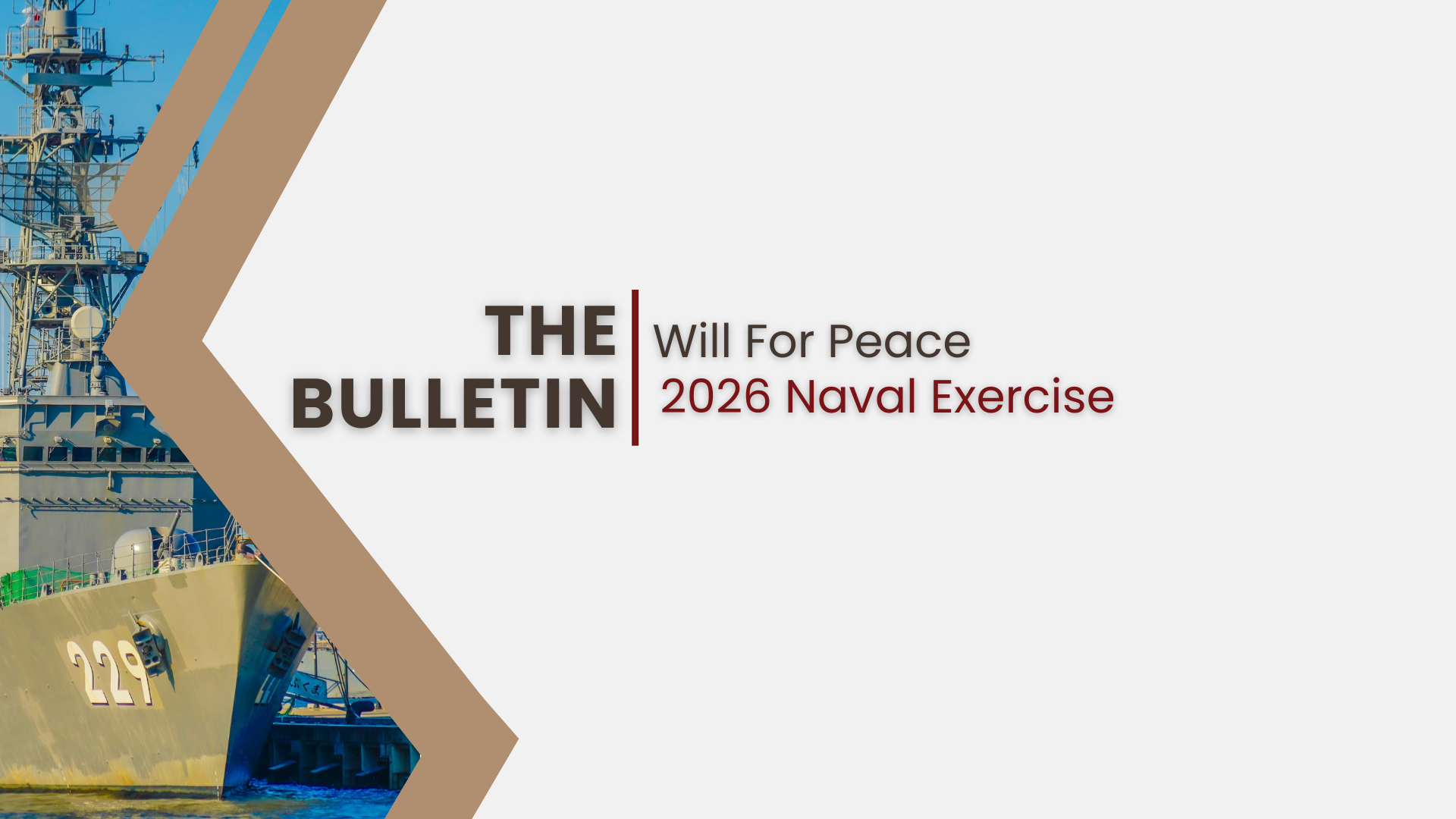
Military relations face acute pressure from the “Will for Peace 2026” BRICS+ naval. Hosted by South Africa and led by China, the exercise involved Russia, the UAE, and controversially, Iran—despite President Cyril Ramaphosa’s directive to limit Iran to observer status to appease the US. Iran’s participation, including live-fire elements, sparked a Board of Inquiry, highlighting civil-military discord.
The US condemned the drills, accusing South Africa of undermining regional security amid Iran’s domestic crackdowns. This echoes past frictions, like 2023 exercises with Russia and China. For South Africa, such coordination bolsters maritime safety in Southern African Development Community (SADC) waters, but it risks US military aid or joint operations. African neutrality here serves empowerment, allowing South Africa to address piracy without Western hegemony
Trade Comparison: Sa’s Key Partners
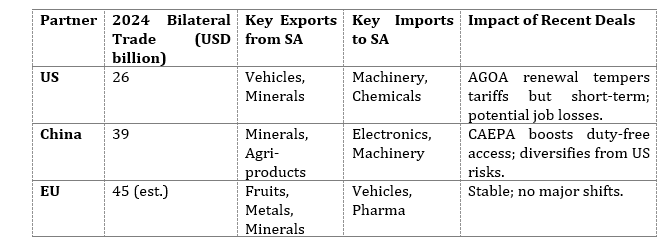
This table, drawn from IMF and government data, shows diversification’s role in debt sustainability and growth.
Conclusion: Empowering African Agency In A Contested World
South Africa’s handling of AGOA and CAEPA exemplifies continental agency, prioritising diversified partnerships to drive development. While US relations strain under trade wars and security divergences, these moves reduce dependency, fostering South-South ties and AU-G20 synergies. Verifiable sources affirm that, despite risks like debt, such diplomacy centres African empowerment, potentially creating youth-inclusive jobs and sustainable FDI. As global rivalries intensify, South Africa’s balanced approach could model resilience for the continent.