Surge In Sophisticated Digital Banking Fraud
Introduction
South Africa’s digital banking sector, long hailed as one of the most advanced on the continent, is facing a sharp escalation in fraud that threatens to undermine public confidence and slow the pace of financial inclusion. According to data referenced by WesBank and drawn from the South African Banking Risk Information Centre (SABRIC), digital banking fraud incidents surged by 86% in 2024, rising from approximately 52,000 cases in 2023 to nearly 98,000. Losses approached ZAR 1.9-billion, a 74% increase year-on-year, with average losses per victim exceeding ZAR 12,500. Roughly 70% of individuals have reportedly been targeted.
These figures reflect more than isolated criminal opportunism. They signal a maturing threat environment in which sophisticated syndicates exploit South Africa’s high digital adoption rates and advanced financial infrastructure. For a nation positioning itself as a regional fintech leader, the surge raises urgent questions about data integrity, consumer protection, and the resilience of digital systems that millions rely on for everyday economic participation.
The Evolving Tactics Of Digital Fraud
Fraudsters have shifted from blunt phishing campaigns to highly targeted, intelligence-driven operations. Impersonation techniques now replicate official bank communications with remarkable fidelity, matching branding, tone, and formatting. Criminal networks time attacks around key lifecycle events—vehicle finance approvals, loan settlements, or post-holiday periods—capitalising on the “expectancy effect” that lowers victims’ scrutiny.
References to specific existing agreements, such as vehicle finance details, suggest possible compromise of customer data through breaches, credential theft, or illicit datasets circulating on the dark web. This evolution moves fraud beyond opportunistic scams toward structured operations capable of scaling across consumer and, increasingly, corporate targets.
Recent Incidents Reveal Broader Vulnerabilities
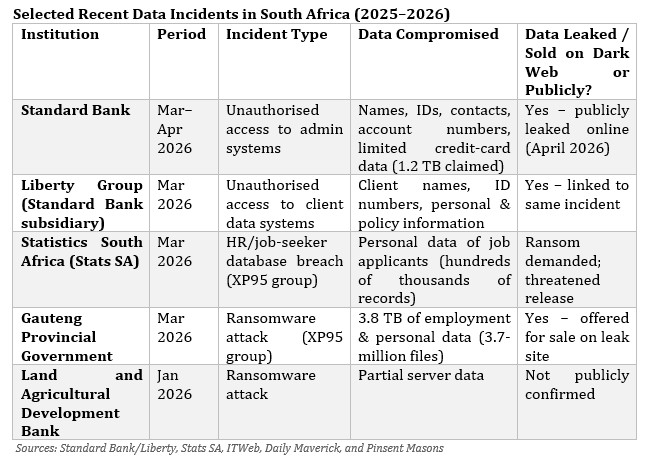
High-profile cases have highlighted systemic risks. Standard Bank has recently disclosed unauthorised access to internal administrative systems, exposing names, identity numbers, contact details, and account-related data for a limited but significant number of clients. Portions of the dataset had reportedly been leaked online, prompting the bank to replace affected cards proactively and issue repeated customer warnings. Transactional systems remained secure, yet the breach highlighted how administrative data can fuel downstream impersonation fraud.
In the public sector, the South African Social Security Agency (SASSA) has faced ongoing scrutiny over vulnerabilities in the Social Relief of Distress (SRD) grant system. Parliamentary investigations and researcher demonstrations of identity fraud weaknesses have led to enhanced reviews, biometric verification pilots, and dismissals linked to internal fraud rings. While SASSA has intensified eligibility checks and shut down fraudulent websites, the incidents illustrate how concentrated personal data in both public and private systems remain attractive targets.
These events coincide with South Africa’s role as a regional digital hub. High mobile and internet penetration, combined with sophisticated banking apps, create a high-yield environment for both local and transnational syndicates.
Economic And Development Dimensions
The financial toll extends beyond individual losses. Sustained fraud erodes trust in digital payment systems, potentially slowing the shift to cashless transactions in an economy already grappling with high unemployment and inequality. For small businesses and emerging fintech players, reputational damage and increased compliance costs can stifle innovation and investment.
From a broader development perspective, cyber fraud threatens South Africa’s attractiveness for foreign direct investment (FDI) in the digital economy. Investors seeking stable fintech environments may hesitate if systemic vulnerabilities persist, affecting technology transfer and job creation in high-growth sectors. Personal debt burdens rise when victims absorb unrecoverable losses, compounding household financial strain and limiting consumption.
However, the surge in sophisticated attacks is simultaneously driving demand for advanced cybersecurity solutions. South Africa’s cybersecurity market is growing rapidly—with projections showing compound annual growth rates (CAGR) of 8.5–13.6% through the early 2030s—attracting foreign investment and creating opportunities for technology transfer and job creation in high-growth security services. This dual dynamic highlights both challenges and new avenues for economic resilience and continental leadership in digital security.
On the continental stage, South Africa’s experience mirrors wider African challenges. With the continent leading global mobile money adoption, annual cybercrime losses are estimated at USD 4-billion. Weaknesses in one major market risk spill-over effects, undermining cross-border digital trade ambitions under frameworks such as the African Continental Free Trade Area. South-South cooperation on cybersecurity standards—through platforms like the African Union or BRICS digital initiatives—could help harmonise responses and reduce dependency on external solutions.
South African Agency And Regional Security Synergies
Regulatory bodies have responded with stronger frameworks. The Prudential Authority and Financial Sector Conduct Authority’s Joint Standard 2 on Cybersecurity and Cyber Resilience, effective from mid-2025, mandates robust governance, incident reporting, and third-party risk oversight across financial institutions. SABRIC continues to facilitate inter-bank collaboration, including shared intelligence on emerging tactics.
Innovative institutions are also leading by example. Newer entrants such as Bank Zero have demonstrated near-zero fraud through modern architecture and stringent controls, proving that resilience is achievable within South Africa’s regulatory environment.
Regionally, South Africa maintains links with bodies such as the Southern African Development Community (SADC) and contributes to African Union (AU) efforts on the Malabo Convention on cybersecurity. These synergies position the country to share best practices while learning from peers, reinforcing continental agency in digital security rather than reliance on Global North frameworks.
Expert Advisory Perspectives
Industry professionals emphasise proactive, collaborative measures. SABRIC has highlighted the need for enhanced customer education alongside technological defences, noting that most incidents exploit human error rather than technical flaws. Cybersecurity specialists, including those from ESET Southern Africa, warn of the rapid rise in deepfake and AI-driven scams and urge banks to invest in real-time behavioural analytics. Academics from institutions such as the University of the Witwatersrand stress the importance of digital literacy programmes targeted at vulnerable communities and cross-border law enforcement cooperation to disrupt syndicates.
These perspectives reinforce that technical upgrades must be paired with public awareness and policy coherence—without becoming the central narrative of the response.
Towards Resilient Digital Empowerment
The surge in sophisticated digital banking fraud presents a clear test for South Africa’s digital ambitions. Yet it also offers an opportunity. By prioritising African-led innovation, regulatory agility, and regional collaboration, the country can strengthen the very systems that drive financial inclusion and economic empowerment. Protecting digital trust is not merely a defensive necessity, it is foundational to realising a more inclusive, self-reliant continental future.